Most candidates preparing for technical loops tend to bounce between two equally exhausting extremes: grinding through algorithmic problem sets in total isolation, or setting up occasional mock sessions with colleagues who are usually too polite to offer brutally honest feedback. Neither approach accurately replicates the erratic, high-pressure cadence of a live hiring panel. I decided to break that cycle by spending a month with an AI interview assistant that promises not just real-time support, but an interactive sandbox mode built to harden your communication skills long before you hop on an official call. Instead of deploying it as a desperate, last-minute safety net, I integrated the utility directly into my daily practice routine to see if a localized coach could close the gap between theoretical knowledge and execution under fire.
Shifting from Passive Review to Active Feedback Loops
Before starting this experiment, my preparation mirrored the standard tech playbook: bookmarking curated repositories, resolving runtime logic in silence, and occasionally talking to an empty room to practice behavioral prompts. The feedback was always delayed and, let’s be honest, entirely self-contained. What I actually lacked was an immediate, unvarnished mirror to critique my conceptual clarity, pacing, and architectural delivery.
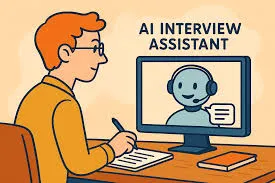
The application’s native simulation mode allowed me to replicate an entire technical round from scratch. The AI assumed the role of a demanding hiring manager, listening to my verbal explanations, pushing back with logical follow-ups, and ultimately scoring my performance across highly specific dimensions.
The Contrast: Solo Problem Solving vs. Articulating Under a Timer
During my initial practice runs, the system would drop a complex system design prompt, track my verbal architecture explanation, and instantly render a visual post-mortem of my argument.
In my testing, the analytical engine immediately flagged that I was consistently rushing through systemic trade-off discussions—a critical pacing flaw I had never noticed because no human partner had ever called me out on it so bluntly. Seeing a stark visual layout of my omitted non-functional requirements forced me to radically re-engineer my conceptual approach. From a user perspective, this kind of objective mirroring is infinitely more instructive than reading a static solution manual after you’ve already finished rambling.
The Core Preparation Circuit: A Three-Phase Workflow
To derive any actual value from a localized simulator, your routine must be highly structured; otherwise, daily practice quickly devolves into a directionless loop. Over my thirty-day trial, the optimal workflow stabilized into three distinct, intentional phases.
Phase 1: Seeding the Engine with Granular Context
Before throwing a single curveball question your way, the system requires you to define the operational boundaries of your career history. I uploaded my current technical resume, specified “Senior Frontend Engineer” as my target tier, and locked in React and TypeScript as my core execution stack.
The software parsed the document cleanly, isolating key legacy systems and project milestones. Rather than stopping there, I manually appended a few raw, unpolished talking points regarding a difficult multi-repository migration and a complex cross-team governance victory. This configuration step felt entirely different from a standard profile setup—it felt like briefing a personalized coach on your real-world battle scars so it could reference them intelligently later on, rather than generating generic corporate template answers.
Phase 2: Calibrating the Sandbox Architecture
With the profile background established, I shifted from the initialization panel into the active practice control environment. Here, the system partitions its focus into specialized tracks: behavioral STAR sequences, live coding assessments, and high-level system architecture design.
[Resume & Stack Priming] │ ▼ [Track Selection Panel] ───► (Behavioral / System Design / Algorithmic) │ ▼ [Simulated Session Active] ───► Live Timer + Dynamic Voice Probing
I typically opted for a mixed-mode simulation: a brief behavioral cross-examination immediately followed by a challenging algorithmic prompt, perfectly mimicking a standard first-round technical screen. The AI interviewer’s voice delivered prompts at a steady, conversational pace while a low-profile timer ran in the background. That subtle visual countdown introduced just enough psychological stakes to replicate the underlying stress of an official call, far better than unmonitored local IDE sessions.
Phase 3: Post-Response Diagnostics and Structural Analysis
The moment I finished speaking and hit the stop trigger, the software skipped standard platitudes and immediately began dissecting my delivery. The evaluation dashboard displayed a granular clarity rating, isolated my repetitive filler words, and called out specific technical areas I had surfaced but failed to back up with real metrics.
In one notable session, the diagnostic tool noted that I had explained a complex infrastructure solution perfectly but completely failed to tie it back to core business metrics—a specific blind spot that directly mirrored feedback from an actual onsite loop I had failed in the past. The ability to cross-reference my spoken logic against the AI’s structural gap analysis created a tighter, more effective loop than static reading could ever provide. While final results will naturally scale with how transparently you speak and how detailed your baseline notes are, the alignment in my sessions felt incredibly accurate.
Head-to-Head: Comparative Preparation Frameworks
Performance AspectSolo Text Documentation & PlatformsTraditional Peer Mock LoopsSimulated Real Time AI Interview CopilotCritique LatencyNon-existent or entirely manualImmediate, but often filtered or sugarcoatedSub-second processing post-responseContextual TailoringGeneric; requires manual translation to your pathBound to your partner’s specific industry backgroundHighly fluid; maps directly to uploaded profile notesBehavioral EvaluationRestricted to reading model text layoutsHighly variable; dependent on your partner’s probing skillHighly consistent; flags structural gaps and missing metricsScheduling OverheadZero friction, but highly vulnerable to procrastinationSevere; demands aligning multiple professional calendarsOn-demand availability for 24/7 localized executionStress SimulationLow; lacks any active verbal componentModerate; depends heavily on your partner’s focusMedium; persistent timers and voice tracking build focus
Unmasking the Limits: What A Month of Use Actually Revealed
An automated coach is only as valuable as your awareness of its boundaries. After a month of near-daily interaction, several clear constraints emerged that any candidate should keep in mind:
-
The Formulaic Trap: The feedback engine naturally rewards strict compliance with rigid formats like the STAR method. Relying too heavily on this can inadvertently train you into an overly clinical, formulaic delivery style that might strike an experienced human interviewer as robotic or over-rehearsed. Reading a room remains an exclusively human skill.
-
Repetitive Probing Vectors: While the simulation engine handles follow-up questions well, it occasionally falls back on similar probing angles across different sessions. If you aren’t careful, this can lull you into a false sense of security by training you to excel against one specific conversational script.
-
The Whiteboard Blindspot: In algorithmic modes, the software pushes you to articulate your conceptual approach out loud before execution, but it cannot grade the actual aesthetic elegance or real-time compilation of the code you write in a separate workspace. The critique remains localized to your verbalized logic.
-
The Adrenaline Delta: No machine, regardless of its processing depth, can perfectly mimic the sudden spike of adrenaline that hits when a human decision-maker leans forward, narrows their eyes, and questions your core engineering choices.
The Practical Takeaway
What stayed with me after thirty days wasn’t the technical novelty of an algorithm parsing my vocal cadences. It was the quiet, fundamental confidence that comes from knowing my own career engineering stories and architectural reasoning so thoroughly that I could deploy them instantly without scrambling. A utility that forces you to repeatedly articulate your technical execution, while relentlessly highlighting your structural gaps, becomes an incredibly honest mirror.
While I originally investigated these tools looking for a reactive real time AI interview copilot that could assist during live calls, I walked away realizing that the proactive simulation workflow had already rewired how I organize my thoughts under pressure—long before I ever felt the practical need to engage an invisible layer.